Fridge magnet questions
Eight questions come up more than any others, and four numbers do most of the work in answering them. A painted door keeps only 60 to 80 percent of a magnet's catalogue pull. Neodymium holds about seven times what ceramic ferrite holds at the same size. Austenitic 304 stainless is not magnetic and ferritic 430 is. An N42 magnet gives up above about 80 C while ferrite carries on to about 250 C. Once those four are in your head, most of this section is arithmetic.
Every page here opens with the answer in its first paragraph, with a figure in it wherever a figure exists. What follows the first paragraph is the working. How the thing actually happens, the pull table, the cases where the short answer is wrong, and what to do about it. If you want the sentence and nothing else, read the box at the top and close the tab. We would rather you did that than read four hundred words of preamble to reach the same place.
| Question | Short answer |
|---|---|
| What is the strongest fridge magnet? | A 16 mm neodymium pot magnet with a hook, at 6,000 g on bare steel. Among plain discs, 20 by 3 mm N42 at 3,500 g. |
| Do magnets scratch fridges? | The magnet does not. Grit dragged under it does, and chipped plating leaves rust rings. |
| Why does nothing stick to my stainless door? | It is probably austenitic 304, which is not magnetic. The side panel almost certainly is. |
| Are magnets safe near food? | The field does nothing to food. Hygiene and small magnets near children are the real questions. |
| How do I get magnet marks off? | Gentlest first. Warm water, then isopropyl alcohol, then a cream cleaner along the grain. |
| Will a fridge magnet wipe my bank card? | Not a photo magnet or a sheet magnet. A bare neodymium disc on the stripe, yes. |
| How hot can a magnet get? | Neodymium about 80 C, ferrite about 250 C. The print and the glue fail before either. |
| How should I store spares? | Separated, dry, out of sunlight, and nowhere near cards or drives. |
The four numbers behind most of the answers
Pull force is measured on a flat bare steel plate, thick enough that the magnet cannot saturate it. That is the only fair way to compare magnets, and it is also the reason catalogue figures feel generous in a kitchen. Paint adds 0.1 to 0.2 mm of gap between the magnet and the steel, texture and door curvature add more, and every tenth of a millimeter costs a small disc roughly 10 percent of its pull. The 0.7 multiplier is the shorthand. Magnet strength explained sets out where it comes from.
Material sets the ceiling. A 20 by 3 mm neodymium disc holds 3,500 g and a ceramic ferrite disc of exactly those dimensions holds 500 g. A 0.5 mm flexible sheet of the same 50 mm footprint holds 60 g, and a pressed photo magnet sits far above the sheet with no published figure of its own. That is a range of nearly sixty to one across things that all look like fridge magnets from two meters away, which is why so many of these questions have the same root.
Steel is the third. Austenitic stainless, grade 304, has a face-centered cubic structure stabilized by nickel and holds no magnetic domain, so a magnet slides off it the way it slides off glass. Ferritic 430 is magnetic. Many stainless fridge doors use 304, and side panels on most models are painted mild steel regardless of what the front is made of.
Temperature is the fourth and the one people meet last. N42 neodymium has a maximum working temperature of about 80 C and loses strength permanently above it. Ferrite runs to about 250 C. Neither matters on a fridge door and both matter the moment a magnet ends up on an oven, a hob hood, or a car dashboard in July.
Where these answers come from
Nothing on this site has been measured by us. The figures are manufacturer and reference data, and pages say "listed" or "published" for that reason. When a number simply does not exist in public, the page says that rather than inventing one, which happens more than you would expect around kitchen temperatures, pacemaker clearances, and the coercivity of whatever card is in your wallet.
The safety guidance is the exception worth naming. The US Consumer Product Safety Commission publishes advice on small high-powered magnets, and where a page touches swallowing risk it follows that guidance rather than our judgement. Two of these pages carry it.
If you want the underlying physics rather than the answers, the science section covers how the field crosses the paint layer and why holding weight and Gauss are different measurements. If you are choosing what to buy rather than solving a problem, start at the buying guide or the magnet strength chart instead.
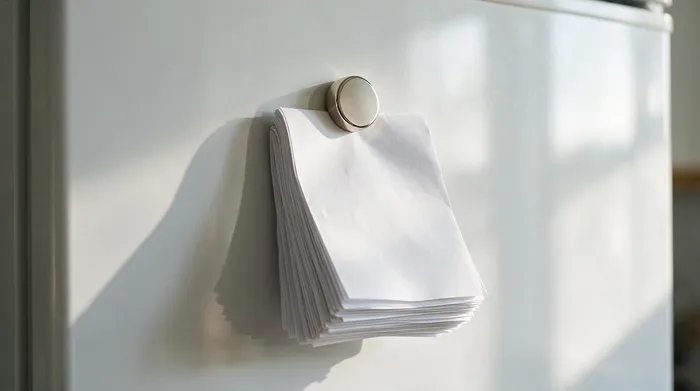
What is the strongest fridge magnet?
The strongest fridge magnet is a neodymium pot with a hook at 6,000 g. What that figure means on a vertical door, and where more pull stops helping.
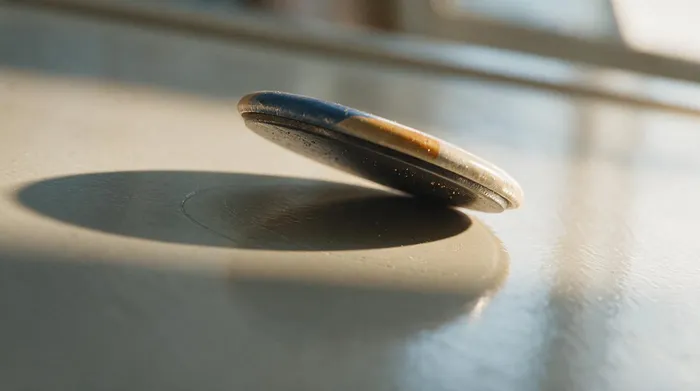
Do magnets scratch fridge doors?
A magnet face is softer than a fridge finish. The marks come from grit dragged underneath, chipped plating rusting, and glue on cheap souvenir backs.
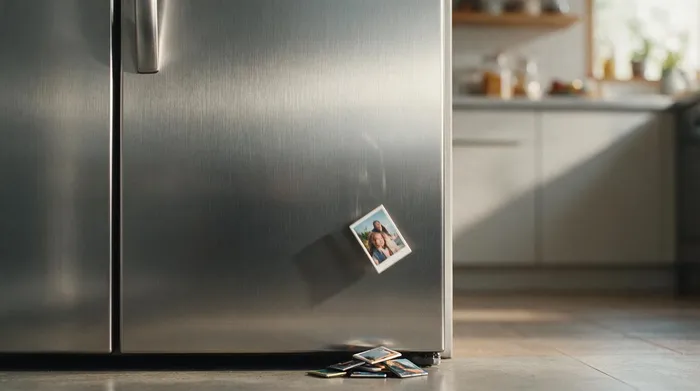
Do magnets stick to stainless steel fridges?
Check whether your fridge door holds magnets, understand why stainless steel varies, and find another place for your collection.

Are fridge magnets safe near food?
A magnet's field does nothing to food or to spoilage. What matters is hygiene on a surface hands touch all day, and small magnets around children.
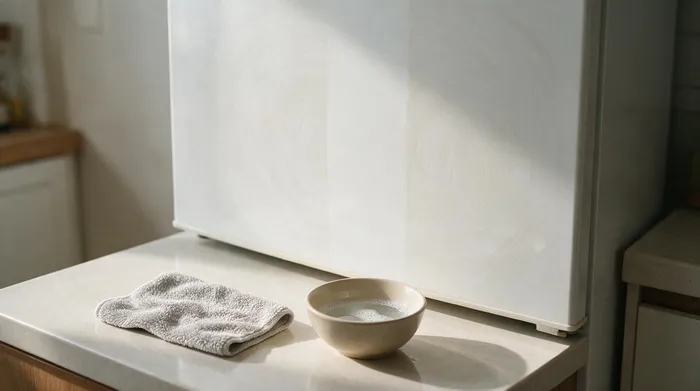
How to remove magnet marks from a fridge
Rust rings, adhesive residue, scratches in paint and sun outlines each need a different method. Gentlest first, and what never to use on stainless.
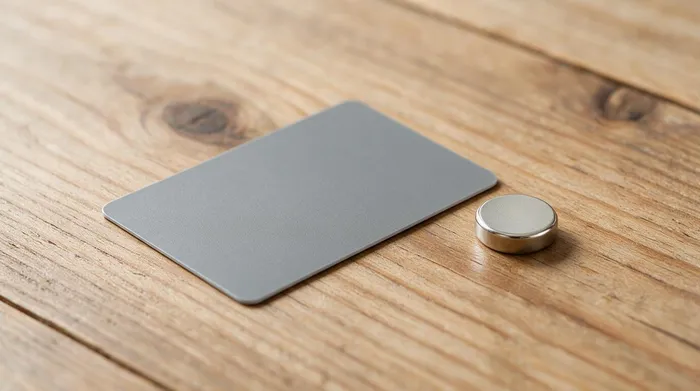
Do fridge magnets wipe credit cards?
A photo or sheet magnet cannot rewrite a magnetic stripe. A bare neodymium disc in direct contact can. What that means for cards, keycards and drives.
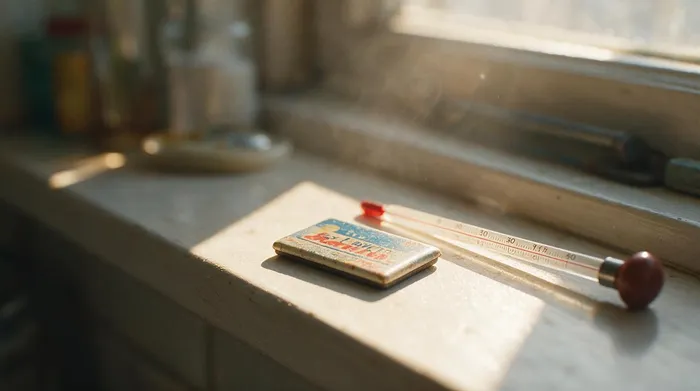
How hot can a fridge magnet get?
Ferrite works to about 250 C and neodymium N42 stops near 80 C with permanent loss above it. Ovens, hobs and hot cars, and what fails before the magnet.
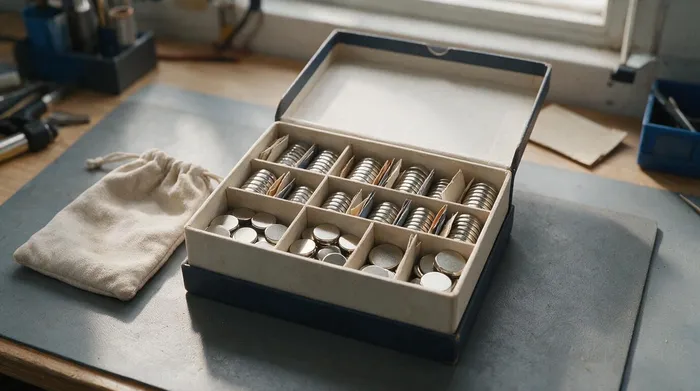
How to store fridge magnets
Stacking neodymium chips the plating and a chipped magnet rusts. How to store spares dry, separated, out of sunlight and away from cards and drives.
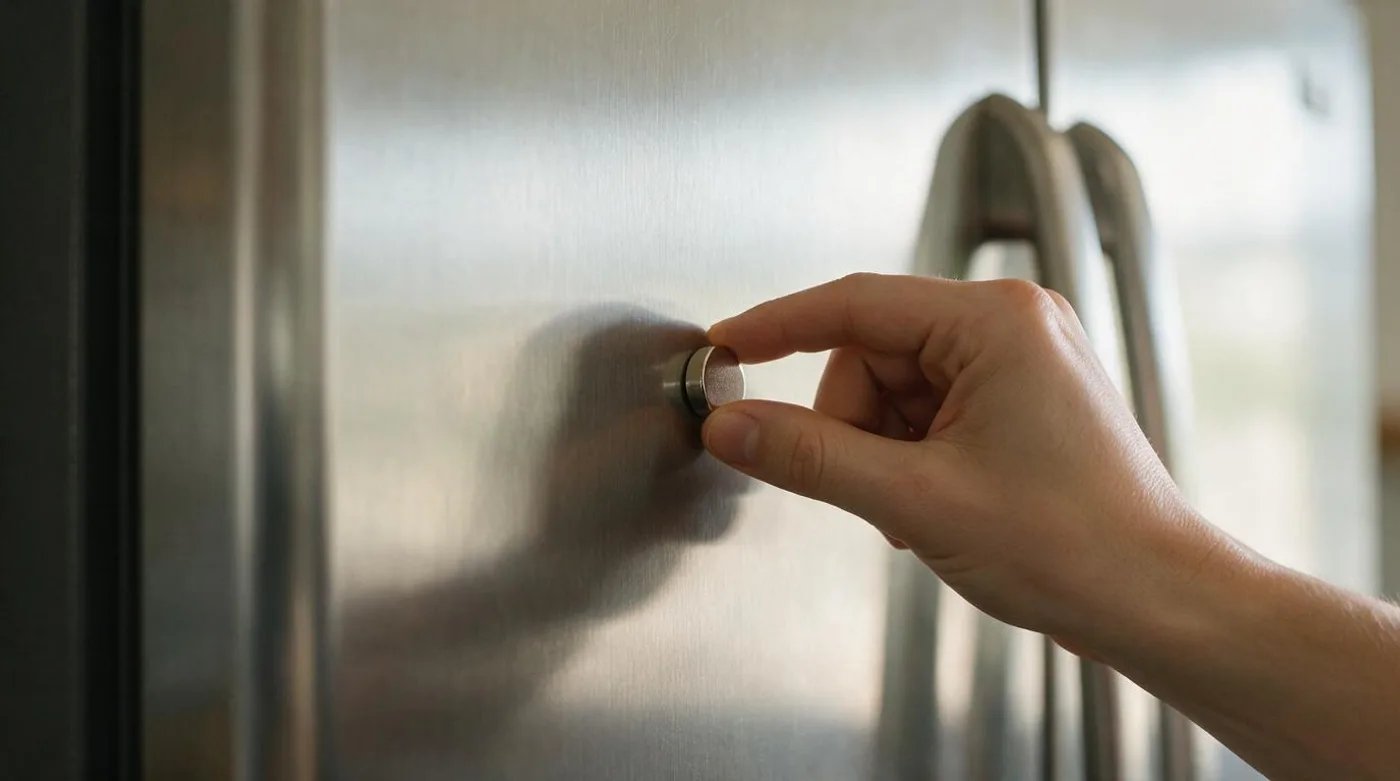
Frequently asked
Why does a magnet hold less on my door than the packet says?
Pull force is quoted on a flat bare steel plate. A painted or coated door keeps 60 to 80 percent of that figure, so multiply by about 0.7. A 12 by 3 mm N42 disc rated at 2,500 g holds roughly 1,750 g on a real door.
Which single number tells me how strong a magnet is?
Pull force in grams, at a stated size, on a stated surface. Gauss describes the field at one point and does not predict holding weight. A 12 mm N42 disc reads about 4,000 Gauss and holds 2,500 g, and neither number can be worked out from the other.
Why do some of these answers refuse to give a figure?
Because nobody publishes one. We print manufacturer and reference figures, and where a number does not exist we say so instead of guessing. Kitchen surface temperatures and pacemaker clearances are two cases where you will see that.
Are the answers here specific to one brand of fridge?
No. The figures are for the magnet, not the appliance. What varies by fridge is the door, which is either magnetic steel or austenitic 304 stainless, and a magnet on the side panel settles that in ten seconds.