Do magnets stick to stainless steel fridges?
Some stainless steel fridge doors hold magnets and some do not. It depends on the steel and construction of the panel. Try a magnet that holds securely on another surface, then test the door face and side separately. If the door will not hold it, use a steel display board.
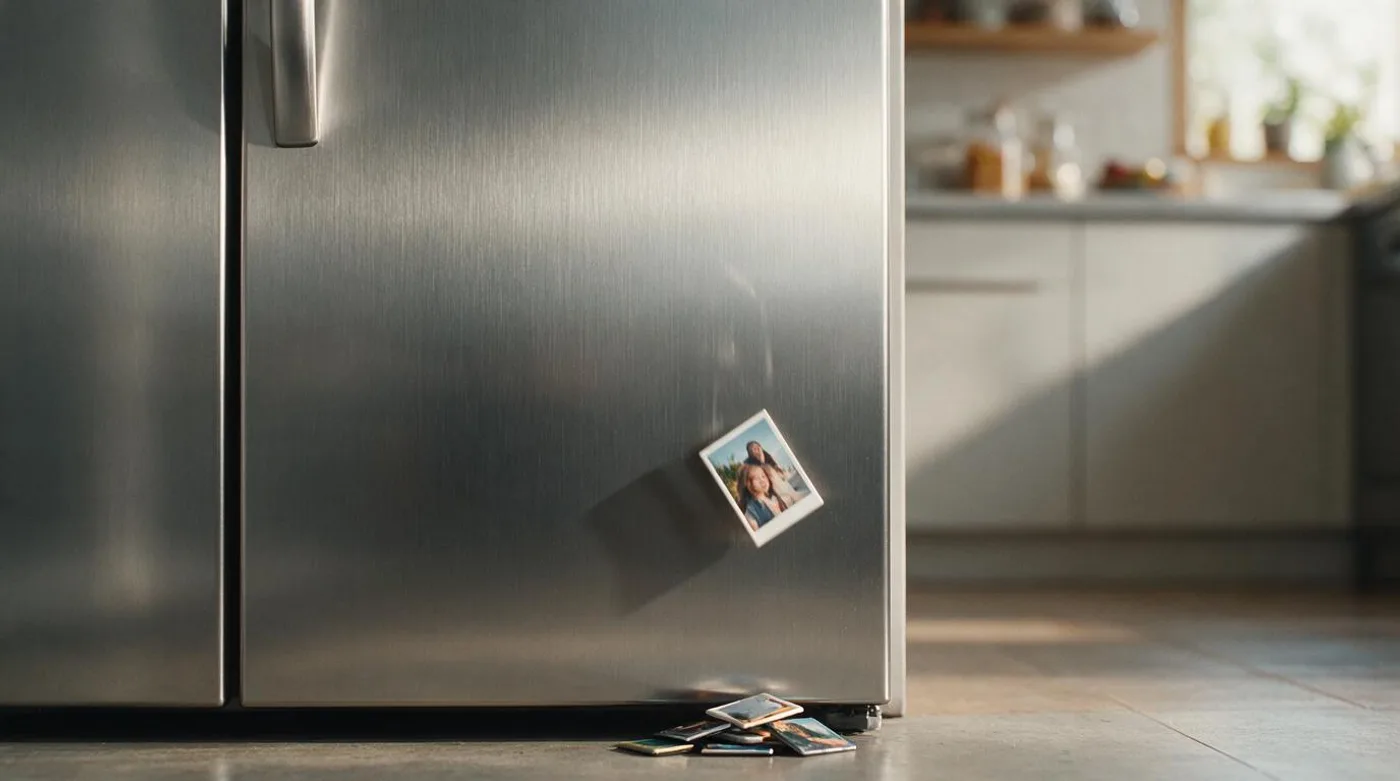
Check the door face
Take a magnet that holds securely on another steel surface and place it gently in the middle of the door. Let go. Then try the side panel separately. Door and side panels can use different materials.
If the magnet sticks but slowly slides, the surface is attracting it. The problem may be the backing, surface finish, or the weight it is carrying. Check it with a light piece of paper before adding a thicker stack.
If it drops immediately, try another known working magnet. The test tells you whether your magnets work on that panel. It cannot identify the exact grade of steel.
Why stainless steel varies
Stainless steel is a family of alloys. Austenitic grades such as 304 are generally nonmagnetic, while ferritic grades such as 430 are magnetic. Bending and other manufacturing processes can also affect local magnetic behavior.
Appliance listings do not always identify the door material, and a stainless appearance alone does not answer the question. If you are buying a fridge, ask the retailer whether magnets work on the actual model or test a display unit with permission.
| What happens | What to try next |
|---|---|
| The magnet holds on the door | Check it with the paper or photo you want to display |
| It holds on the side but falls off the door | Use the side panel or a separate display board |
| It sticks but slides down | Try a lighter load and check the backing and finish |
| It catches only near an edge | Check the flat area where you want the display |
Give the collection another surface
A steel display board gives souvenir magnets a dedicated place beside the fridge. Check that the board itself holds your magnets before mounting it. A frame around a steel sheet can also make the collection easier to arrange.
If a fridge side panel holds magnets and is accessible, it may be enough for photos or children's drawings. Keep the display clear of ventilation areas and check the appliance instructions before attaching anything permanent.
Adhesive sheets and wall coatings vary. Try a small sample before covering a whole area or hanging a heavy object. The display ideas offer arrangements for lighter pictures and drawings.
Use a test that answers your display question
Choose an ordinary fridge magnet that already stays in place on another suitable surface. Begin with the magnet alone, then try it with the photograph or paper you want to hang. A magnet that holds itself may still slide when you add a folded school letter. Keep those results separate when deciding whether the door is suitable for your display.
Try several points within the flat area, away from the handle and dispenser. You do not need to test every inch of the door, but one response near a seam can mislead you about a larger arrangement. Check where the top and bottom rows would go. Keep a hand underneath while releasing the magnet so a heavy souvenir does not fall onto the floor.
If you are planning a 12 inch wide block of photographs (about 30.5 cm), test the middle and both ends of that space. That width is an example for checking a proposed display, not a claim about the door material. A model with two door panels may also give different results on each. Treat each surface as its own place to test.
What a stainless grade can and cannot tell you
Worldstainless distinguishes austenitic and ferritic stainless steel families. Their structures explain why stainless products can behave differently around a magnet. Austenitic steel is generally nonmagnetic in its annealed condition, while ferritic steel is magnetic. Those categories describe material behavior; a brushed silver appearance does not identify a category.
The British Stainless Steel Association also explains that cold working can change magnetic response in some austenitic grades. Bending and forming can therefore leave local differences. That is one reason a magnet catching on an edge does not prove that the central face will hold a collection. It also means that a magnet test alone cannot certify an exact alloy grade.
If the maker publishes a grade or construction for the actual door, use that information alongside the practical test. A general statement that the appliance is stainless steel may refer to more than one part or finish. Ask about the exterior panel where the magnets will go, rather than assuming the handles, side panels, and door face all share a material.
When a magnet sticks but moves down the door
Slow sliding means the situation is different from a magnet falling away immediately. Reduce the load first. Remove paper folds or other material that stops the backing sitting evenly. Inspect the magnet for a recessed back, a loose component, or a raised edge. A rigid souvenir can touch at only a few points if its casting is uneven.
Check the surface and backing for loose dirt, using the care instructions for both. Do not drag a gritty magnet across the finish to see whether it grips better somewhere else. Lift it gently, clean the contact surfaces as directed, and try another spot. If the printed magnet itself is fine but a stack of papers slips, put fewer papers under it or use a holder designed for that task.
Coatings, contact, and gaps can affect magnetic attraction, as K&J Magnetics describes in its test guidance. A direct pull figure also does not establish how much sideways load will stay up. There is no universal percentage you can subtract from a rating to predict every finished fridge door. Keep the strength chart for comparing reference figures and test your own display for fit.
Choose another display surface that fits the collection
Measure the collection before choosing a board. Arrange paper outlines on a table with the spacing you want. Six 2.5 inch squares in two rows of three, with quarter-inch gaps, occupy 8 x 5.25 inches (about 20.3 x 13.3 cm). That is a worked geometry example; add your preferred border and any space for lifting magnets before choosing the board size.
Check that a board is described as magnet receptive. A surface made for markers does not automatically have a steel backing, and a stainless-looking panel can have the same uncertainty as the fridge. If possible, try the same magnet you used in the door test. Mount the board according to its instructions and keep its stated load limits in mind when adding heavy souvenir pieces.
A side panel may provide enough room without a separate board. Check whether you can reach it with the door open and whether the display obstructs vents or nearby furniture. A note hidden in the narrow gap between the fridge and a cabinet is unlikely to be useful, even if the magnet holds perfectly. An accessible steel cabinet or suitable office board can be a better home for a few photographs.
Before ordering a new set from the Fresh Magnets photo magnet collection, or any other seller, check the chosen display surface and the exact product dimensions. A set's size and print finish cannot establish whether the steel in your particular fridge will attract its backing.
Ask these questions when replacing a fridge
If keeping your collection on the kitchen door matters, make that part of the purchase check. Ask the retailer whether magnets hold on the exterior front of the exact model and finish you are considering. Different finishes within a model range may need separate confirmation. Ask before taking a magnet to a display appliance so you can check it without marking the showroom finish.
Take a photograph of the model label if you test a display unit. Record which door and area you tried. That avoids confusing a similar-looking fridge with the model on your order. A salesperson's general answer about stainless appliances is less useful than a result on the selected finish or a written statement from its manufacturer.
If the answer remains uncertain, plan a separate magnetic display before delivery. Measure a place beside the fridge, leave clearance for doors and handles, and use the layout planner to check a repeated arrangement in inches. Keep heavy cast souvenirs and thin photo magnets in separate groups while sketching: their outlines and contact surfaces may be very different even when they came from the same collection.
Frequently asked
Are the sides of a stainless fridge magnetic?
Many fridges have painted steel side panels that hold magnets even when the door does not. Test the side you want to use rather than assuming it matches the door.
Will a stronger magnet fix a nonmagnetic door?
A stronger magnet cannot make a nonmagnetic panel behave like ordinary steel. If a known working magnet drops off the door, check a side panel or use a separate steel board.
Why does a magnet stick near an edge but not in the middle?
An edge may have different material, fasteners, or steel changed by bending. Test the flat area where you want to place the magnet; a small spot at a seam does not establish that the whole door will hold it.
Does a fingerprint-resistant finish stop magnets sticking?
The steel beneath the finish matters first. A coating also creates a small gap, which can reduce grip on a panel that otherwise holds magnets. Try a sample on the finished surface.