Buying fridge magnets
A box of 60 magnets arrives, the print is sharp, and inside a week half of them have crept down the door under a takeaway menu. Nothing went wrong at the printer. The order was for 0.5 mm flexible sheet, which holds about 60 g at 50 x 50 mm on a bare steel plate and nearer 42 g once you multiply by 0.7 for a painted door. Two sheets of menu card weigh more than that.
Four decisions sit behind every magnet order. Size, thickness and build, quantity, and price per magnet. All four get made in about ninety seconds on a product page, usually with only one of them actually printed on the screen.
What each decision decides
| Decision | What to check on the listing | What a wrong guess costs |
|---|---|---|
| Size | The size in millimeters, and the shape of the crop you are sending | A group shot squeezed into a 57 mm circle, or four magnets filling a 50 cm door |
| Thickness and build | Sheet, pressed, or a disc glued to a molded back, plus the thickness in millimeters | 60 g of hold where the job wanted the pressed build |
| Quantity | The minimum order, and how many the door shows at once | Paying for 25 to display nine |
| Price per magnet | Whether shipping and setup sit inside the unit price | A $1.20 magnet that lands dearer than a $2.50 one |
Size is a door problem before it is a photo problem
Usable door width on most fridges runs 40 to 60 cm, and that number caps the order long before the picture does. Nine 50 mm squares with 6 mm of air between them come to 498 mm, so a 50 cm door takes nine across. Four 4 x 6 inch prints at 102 mm wide come to 426 mm and fill the same row with four pictures instead of nine. Neither layout is wrong. They are different answers to how much of one photograph you want to see from the other side of the kitchen.
Crop shape does the rest of the damage. A 2 x 3 inch magnet is 51 x 76 mm, the same 2:3 a 35 mm frame already has, so a full frame drops in with nothing lost. A 64 mm square wants a square crop and takes the ends off anything else. A 57 mm round cuts a circle out of the middle and shows about 79 percent of what a square of the same width would show, which is unkind to five people standing in a line. Sizes and thickness has both units and the layout arithmetic, and the size visualizer draws each size at true scale so you can hold a bank card against it.
Build sets the hold, and thickness only trims it
At the same 50 x 50 mm footprint, flexible sheet goes from 60 g at 0.5 mm to 110 g at 0.75 mm. Swap the build rather than the millimeters and a pressed photo magnet, 57 mm round, holds several times either of those, because the flat ferrite disc behind its crimped steel shell carries far more magnetic material than a quarter millimeter of vinyl ever adds. No seller publishes a pull force for the pressed build and we have not put one on a gauge, so that comparison stays without a number until somebody measures it. Thickness is worth arguing about only once you have picked the material. Magnetic sheet against pressed puts the two builds side by side, and magnet strength explained covers why the material dominates.
Every figure on this site is a plate figure, measured on bare flat steel. A painted or coated door gives back 60 to 80 percent of it, because paint alone adds 0.1 to 0.2 mm of gap and each tenth of a millimeter costs a small disc roughly 10 percent of its pull. Multiply by 0.7 and buy on that.
Quantity gets set by the minimum order as often as by the door
The three sellers we track bracket the range. Shutterfly lists a minimum of 1, Vistaprint a minimum of 25, and the pressed photo magnets in best photo magnets do not publish a minimum at all. A minimum of 25 turns a $1.20 magnet into a $30 experiment, which changes how carefully you want to check the crop first. How many to order works through door arithmetic, gift sets, wedding lists, and trade show runs, and bulk against single covers where the price breaks land.
What the unit price leaves out
Two listed prices anchor the market: $2.50 each at Shutterfly and $1.20 each at Vistaprint. Shipping, any setup charge, and the ones you throw away because the crop was wrong all belong in the real per-magnet figure, and none of them appear next to the headline number. Price per magnet does that arithmetic properly.
A listing that names the material, gives the size and thickness in millimeters, states a minimum order, and quotes a price per magnet answers all four decisions in one screen. Plenty of good sellers leave one or two of those blank, and where that happens this site writes "not published" rather than filling the gap. What to look for is the checklist version, and printing methods covers how the image gets onto the magnet in the first place, which decides how it looks in five years.
Shutterfly's minimum of 1 makes a single sheet magnet cheap to order as a test print. Pressed magnets publish no minimum, so ask before committing a wedding list to a crop you have only ever seen on a screen.
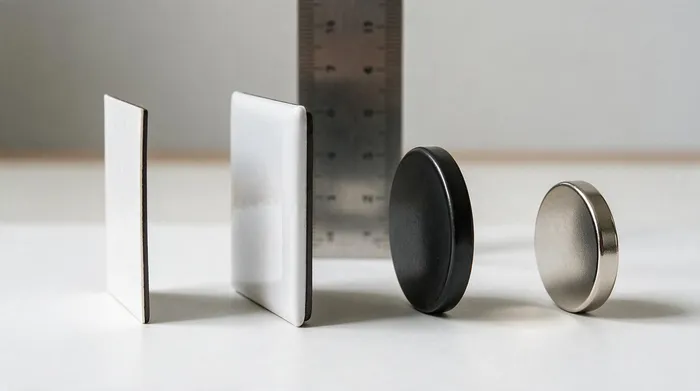
Measuring fridge magnets: outline, rim, and thickness
Measure a fridge magnet's finished outline, visible print area, and overall thickness. Use exact inch conversions and a layout calculation.
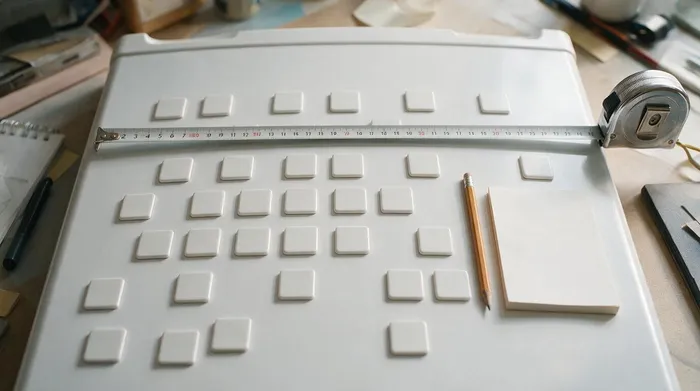
How many fridge magnets to order
Door arithmetic for every common magnet size, quantities for gift sets, weddings, trade shows and shop counters, and how to time a reorder.

How fridge magnets are printed
Offset, digital, direct UV, laminated print, screen printing and dye sublimation compared on color, resolution, durability and minimum run.
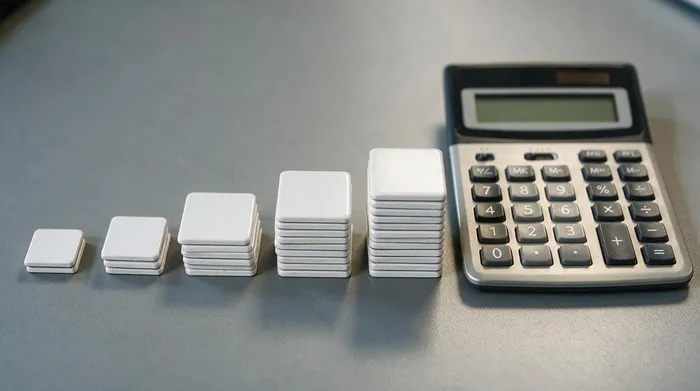
Calculate a magnet order's delivered cost
Compare magnet quotes using the total payable, delivered quantity, and quantity you actually need. Includes two worked arithmetic examples.
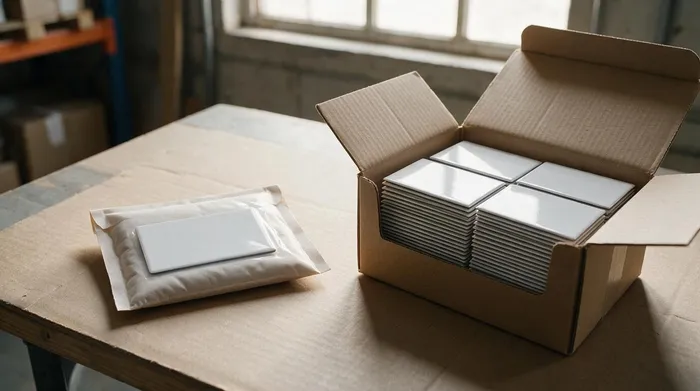
Magnet quantities: pack sizes, minimums, and spares
Calculate the quantity you need, compare available pack sizes, and check a sample before ordering a large batch of magnets.

How to read a fridge magnet listing
What a fridge magnet listing should publish, the red flags when it does not, and how to turn a pull force figure into what your door holds.