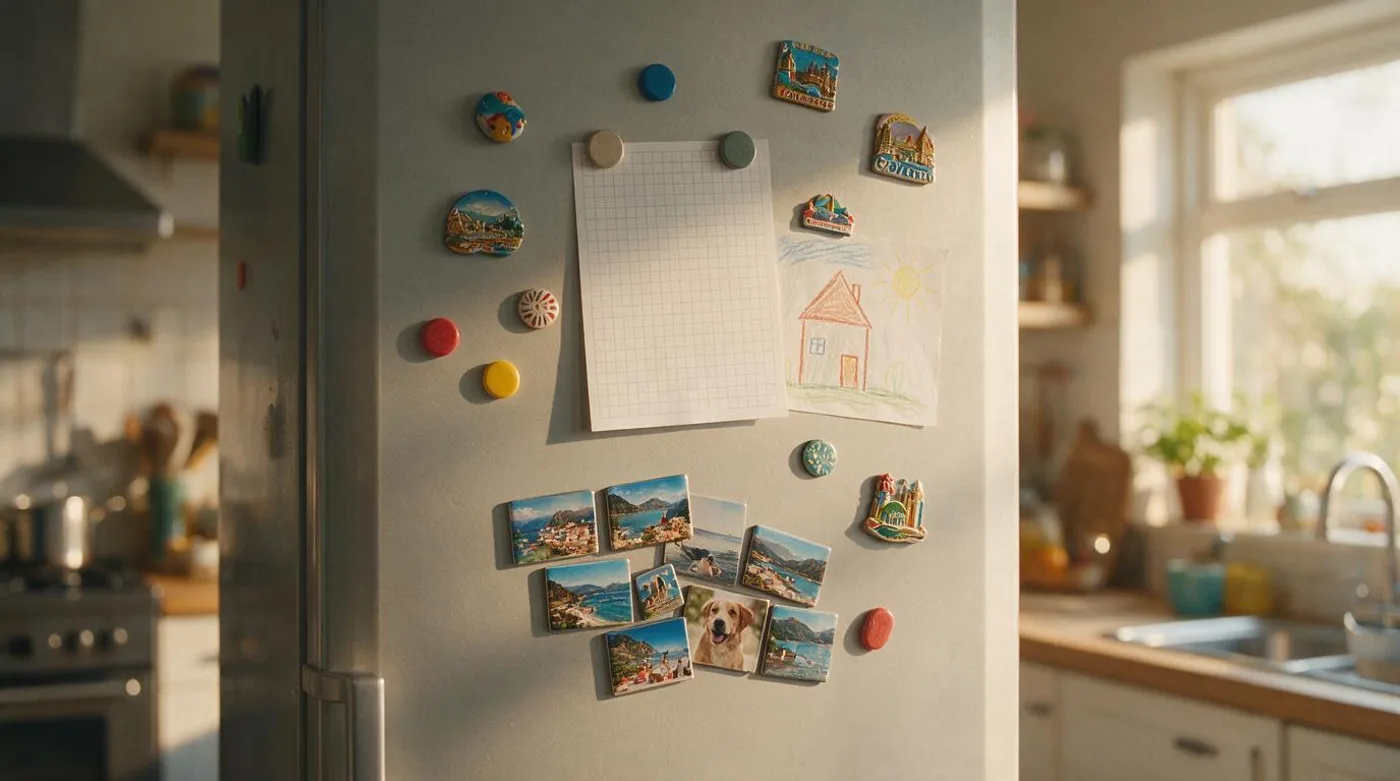
Fridge magnet ideas that use the whole door
Go and measure the front of your fridge before you order anything. Usable width on most models is 40 to 60 cm, and the part of the height you can reach and read without a stool is shorter than the door itself. That rectangle is the largest piece of vertical surface in an average kitchen that nobody has to drill into, and the only one whose contents change every week.
Which is why the door collects what it collects. School letters, a wedding invitation, a photo of somebody else's dog, a takeaway menu that has outlived two of the restaurants printed on it. None of that arrives by design. It arrives because the door sits at eye level in the room everybody walks through, and because putting something there costs nothing and takes a second.
Three things every job asks of a magnet
Hold, size, count. Hold is the one people get wrong, because the number on the packet was measured somewhere your kitchen is not.
A 0.5 mm flexible sheet magnet at 50 x 50 mm holds 60 g on a flat bare steel plate. Your door is painted, and paint adds 0.1 to 0.2 mm of gap between the magnet and the steel, so call it 42 g in practice. That is one takeaway menu and nothing else. A 20 x 3 mm ferrite disc glued behind a souvenir holds 500 g on the same plate. A pressed photo magnet is well clear of the sheet figure too, since it has a rigid ferrite magnet behind a steel shell rather than powder in vinyl, though no seller publishes what it comes to. Multiply any plate figure by about 0.7 and you have a working estimate for your own door. The magnet strength chart lists the rest of them.
Size decides whether the thing is legible from across the room and how much of your 40 to 60 cm it eats. A 64 mm square reads at two meters. A 20 mm craft disc does not, and is not meant to; it is there to hold something up.
Count follows from size, and it is arithmetic rather than taste. Nine 64 mm squares in a three by three grid with 10 mm gaps span 212 mm, a third to a half of a typical door. Six 51 x 76 mm rectangles in a three by two block span 173 mm across and 162 mm down. Work that out on paper first, because a grid that overshoots the door by 30 mm looks wrong in a way you cannot fix afterwards. How many to order runs the same sums for larger quantities.
What each job needs
| Use | What it has to hold | Magnet that does it | How many |
|---|---|---|---|
| Photo display | its own weight and nothing more | pressed photo, 57 mm round or 64 mm square | 6 for a small block, 9 for a three by three grid |
| Save-the-dates | its own weight, after being posted | 0.75 mm sheet or pressed, 51 x 76 mm | one per household, not one per guest |
| Kids' artwork | a stack of paper, and the gap the stack creates | ferrite disc back, clip magnet, or pot magnet | 2 per single sheet, 1 clip per stack |
| Weekly planner and lists | a full A4 or letter sheet, held flat | ferrite disc back, or a magnetic dry-erase board | 4 at the corners of each sheet |
| Souvenir collection | its own weight, which for cast resin is considerable | 20 x 3 mm ferrite disc at minimum | however many you came home with |
| Desk and office | document stacks, keys, a bag | neodymium disc, or a 16 mm pot with a hook | 1 or 2 per load |
The right-hand column is the one people skip. Ordering six of something and discovering it covers a patch the size of a paperback is the most common disappointment in this whole category, and it costs a second order and another wait.
When the door refuses
Half of what follows depends on the door being plain painted steel, and none of it works if the door is austenitic stainless. Grade 304 stainless is not magnetic at all. Nickel stabilises a face-centered cubic structure that holds no magnetic domain, so a magnet slides off it exactly as it slides off a tiled wall. Grade 430 ferritic stainless is magnetic and looks identical in a showroom, which is the whole problem, and why magnets do not stick to stainless goes through how to tell.
Take a magnet to the door before you plan anything on it. If the front fails, the side panel almost certainly passes, since side panels on most models are painted mild steel whatever the door is made of. A side panel is narrower than a door and usually pressed against a wall or a cupboard, so a tall narrow arrangement works there where a photo grid will not. That is the surface where a meal planner earns its place, and where a stack of children's drawings can live without covering the handle.
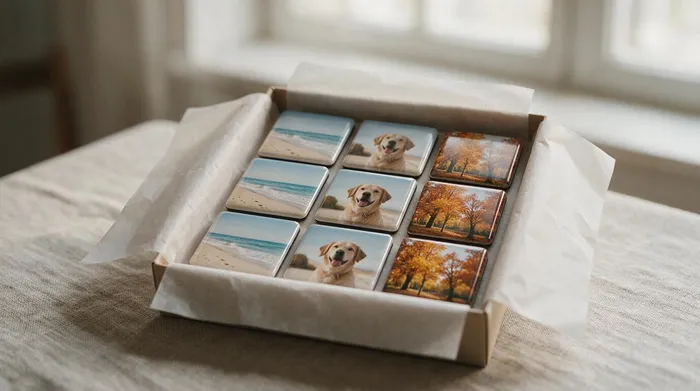
Giving photo magnets: fit, packing, and delivery
Check a recipient's display surface, estimate a set's footprint, and pack photo magnets so their faces and edges stay apart in transit.
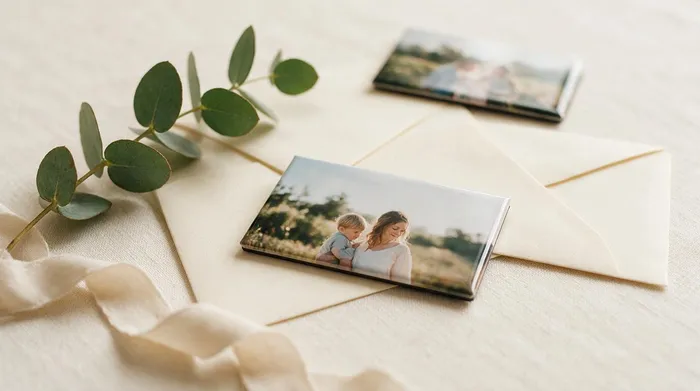
Mailing save-the-date magnets: size and packing
Measure a save-the-date magnet with its sleeve and envelope. Check rigidity, household quantities, and a packed sample before mailing a batch.

Using the fridge as a gallery for kids' art
Plan space for children's drawings, compare clips with flat magnets, preserve photographed artwork, and check CPSC guidance on small magnets.
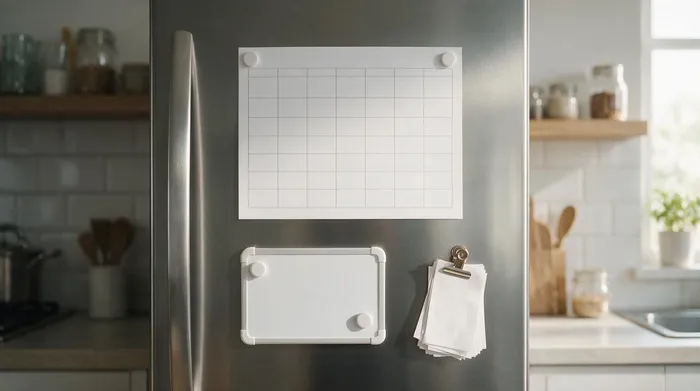
Meal planning on the fridge door
What holds a full A4 or letter sheet flat, how a weekly planner fits across 40 to 60 cm, which clips to use, and what to do on a non-magnetic door.
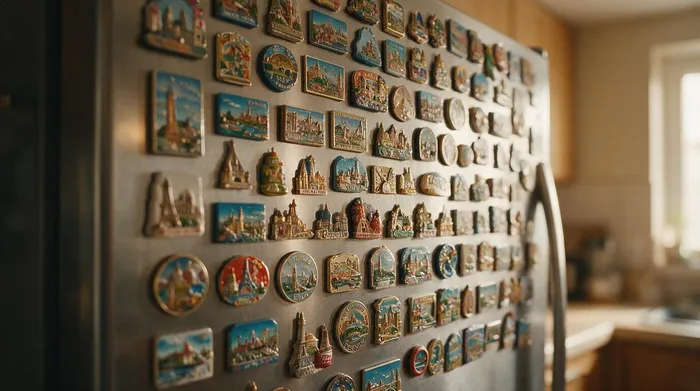
Collecting fridge magnets from trips
Check souvenir magnet backings, plan a mixed collection by its measured size, protect stored pieces, and compare travel photo prints with bought souvenirs.

Magnets at a desk and on office surfaces
Which office surfaces are actually steel, what holds a document stack, which clips and hooks to use, and what to do on aluminum or laminate.