Magnet quantities: pack sizes, minimums, and spares
Start with the number of magnets you need, then add a chosen allowance for copies to keep or replacements. Compare the total price of the available packs, including delivery. A minimum order and a pack size describe different constraints, and neither tells you whether every piece can carry a different design.
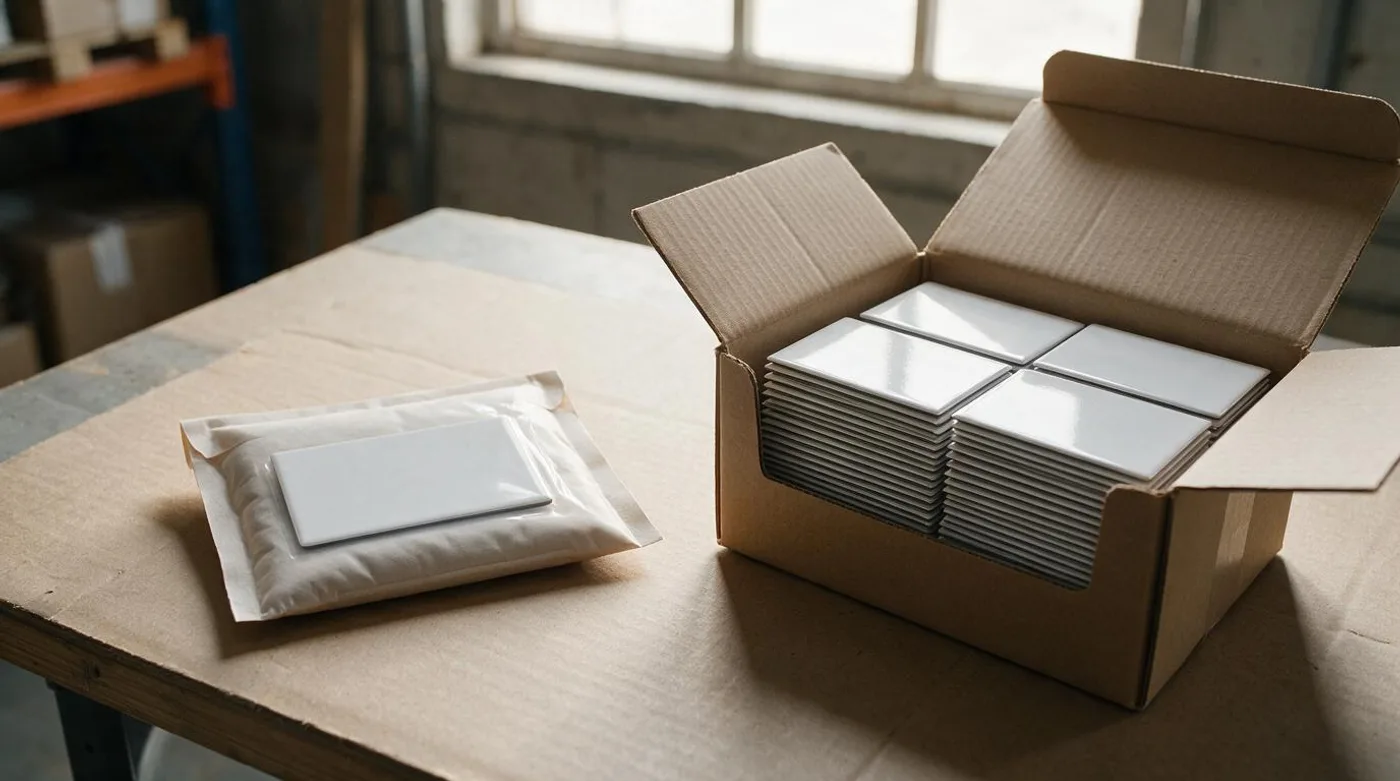
Forty-two recipients do not automatically mean an order of 42 magnets. You might keep two copies, reserve six replacements, or discover that the seller supplies packs of 25 and 50. Count those needs before choosing a pack. A cheap price per magnet tells you little about whether the box contains the right quantity.
A single finished magnet can be enough for a kitchen display. A larger order needs a distribution plan, especially when each recipient gets a different picture. The useful comparison includes the magnets you will use, the money you must pay, and the time needed to check the order.
Count recipients, designs, and spare copies separately
Start with the place each magnet will go. A mailing list counts addresses. A classroom display counts positions on the board. If two people share one household and will receive one magnet between them, the household contributes one to the order. Someone receiving a set of three contributes three. Write those allocations down rather than relying on the size of an invitation list.
Suppose your distribution list has 34 households receiving one magnet each, four households receiving two, and two copies for your own records. That is 34 + 8 + 2 = 44. Six replacement copies bring the planned total to 50. The six are a deliberate allowance for this example, not a standard percentage every buyer should add.
Choose spares for a reason. A spare of the main design can replace a damaged copy. It cannot replace a magnet personalized with another person's name unless you order that exact design again. For a run with 40 different portraits, ask which replacements you want to keep and label them by image. Our quantity planning guide helps turn the recipient list into a usable count.
Pack size and minimum order describe different restrictions. A seller might supply six magnets in a pack and require only one pack. Another might accept any quantity above 25, with a minimum of ten copies per design. Forty different designs would then require 400 magnets, even though the headline minimum says 25. Confirm whether the restriction applies to the order, each size, or every design.
The Fresh Magnets photo magnet collection provides an example of prepared pack choices. Its catalogue includes packs of 6, 9, 12, 15, 25, 50, 100, and 200 for the usual sizes; the 3 inch round also has a four pack. The public shop currently shows a coming soon notice, so catalogue options do not confirm that an order can be placed today. Check the live product and its checkout before relying on a pack for a deadline.
Compare whole packs at the quantity you will use
The smallest pack that covers your count is a starting point. Several smaller packs could cost less, offer a useful division between recipients, or let you separate designs. They could also incur extra shipping or setup charges. Compare the full amount for each combination.
These figures are hypothetical delivered quotes for the same magnet specification. They are arithmetic examples, not prices from Fresh Magnets or another seller.
| Choice for 42 needed magnets | Magnets delivered | Total payable | Cost per delivered magnet | Left after distribution |
|---|---|---|---|---|
| Three packs of 15 | 45 | $90 | $2.00 | 3 |
| Two packs of 25 | 50 | $86 | $1.72 | 8 |
| One pack of 50 | 50 | $80 | $1.60 | 8 |
| One pack of 100 | 100 | $130 | $1.30 | 58 |
The 50 pack costs $10 less than three packs of 15 in this example. The 100 pack has the lowest cost per delivered magnet, but you spend $50 more than on the 50 pack and receive another 50 magnets. If you need only 42, the 50 pack meets the count with eight left over. If you need the planned six replacements and two archive copies as well, all eight already have a job.
NIST's unit pricing guidance explains price comparisons using a consistent unit. For magnets, that unit can be one finished magnet. Keep the construction and size consistent too. A 2 inch square and a 3 inch round differ in footprint and picture space, so their prices answer different buying questions.
Divide the total by the number you need as a second calculation. An $80 order divided by 42 needed magnets is about $1.90 per needed magnet. The $130 order divided by the same 42 is about $3.10. The delivered cost guide explains both denominators and the charges to include.
A second order changes the arithmetic again. Suppose a delivered pack of 25 costs $43, while a delivered pack of 50 costs $80. Buying 25 now and another 25 later costs $86 if the quote stays the same. Buying 50 now saves $6 only if you eventually use both halves. If the second group cancels, the first option leaves less money tied up in unwanted magnets. Date-sensitive text, contact details, and a changed crop can make later copies different from the first batch; keep the original artwork if matching matters.
Check one finished example before multiplying a mistake
A screen preview can show the crop, spelling, and intended layout. It cannot establish the texture of a finished surface, overall thickness, or how the magnet sits against your door. If a physical sample is available, confirm that it uses the same size and assembly as the planned batch. A flexible sheet sample does not answer the packing questions for a rigid shell.
Read a proof at the actual printed size. Print a paper copy at 100 percent, measure its outline, and check names or telephone digits without enlarging the page. Compare the seller's safe area with any text near the edge. On a repeated design, one misplaced digit repeats across the whole order. On a varied set, one wrong file-to-recipient assignment can put the right picture in the wrong envelope.
Inspect a finished sample without taking it apart. Measure the outside edges, look for lifted corners or a loose backing, and check the contact surface before putting it on an appliance. The buyer's specification checklist gives you a record of dimensions and information to request. Ask the seller how it handles replacements and whether a reorder uses the saved artwork or requires a new upload.
Production and delivery need separate space on your schedule. Fresh Magnets describes usual production and dispatch within one to three business days in the USA. That is a seller statement about dispatch, not an arrival promise. A sample stage, your approval, and carrier transit take additional time. For a large order tied to a date, obtain a schedule for that quantity before treating a general shop estimate as a booking.
Plan where the batch will sit while you sort it. Count incoming magnets against the packing list, then group them by recipient or design. Put the retained copies in a labeled box with the approved file name and order reference. Follow the maker's storage instructions; keep finished prints dry and protected from rubbing against loose grit. The storage guide covers the difference between storing flexible sheets flat and separating rigid pieces.
Before placing a repeat order, subtract the usable leftovers you still have. If 18 magnets remain and the next mailing needs 40, your new requirement starts at 22, plus any chosen replacements. Check every leftover for current wording and condition before you include it in that count.
Frequently asked
Are pack size and minimum order the same?
A pack size is the number in one set. A minimum order is the smallest quantity or spend a seller accepts. Check both.
How many spare magnets should I order?
Choose a count based on replacements, late additions, and copies you want to keep. There is no single percentage suitable for every order.