Best kids fridge magnets, safety first
The safest kids magnet is one large molded or foam-backed piece with the magnet sealed inside and no loose parts. The CPSC warns that swallowing more than one small high-powered magnet is a surgical emergency, so neodymium belongs nowhere in a child's set. Ferrite discs and 0.75 mm sheet hold plenty.
Where these figures come from
This comparison uses published product specifications. We have not handled or measured these products. Prices and availability can change; check the seller's listing before ordering. Method, equipment, and limits are on the how we test page.
Spec comparison
| Spec | Molded letter, sealed ferrite disc | Foam letter, flexible sheet back | Wooden letter, flexible sheet back | Building tile, embedded neodymium | Loose neodymium disc, N42 |
|---|---|---|---|---|---|
| Material | Molded plastic body with a ferrite disc sealed inside | EVA foam, flexible ferrite-in-vinyl sheet | Plywood, flexible ferrite-in-vinyl sheet | Molded plastic tile with neodymium bars inside | Sintered NdFeB, grade N42, nickel plated |
| Listed thickness | 3 mm | 0.75 mm | 0.75 mm | Not listed | 2 mm |
| Sizes | 20 mm disc, sealed | 50 x 50 mm sheet | 50 x 50 mm sheet | Not listed | 10 mm diameter |
| Price per magnet | Not listed | Not listed | Not listed | Not listed | Not listed |
| Minimum order | Not listed | Not listed | Not listed | Not listed | Not listed |
| Shipping | Not listed | Not listed | Not listed | Not listed | Not listed |
| Pull force | Not yet measured | Not yet measured | Not yet measured | Not yet measured | Not yet measured |
| Measured thickness | Not yet measured | Not yet measured | Not yet measured | Not yet measured | Not yet measured |
| Print sharpness | Not yet measured | Not yet measured | Not yet measured | Not yet measured | Not yet measured |
| Corner lift after 30 days | Not yet measured | Not yet measured | Not yet measured | Not yet measured | Not yet measured |
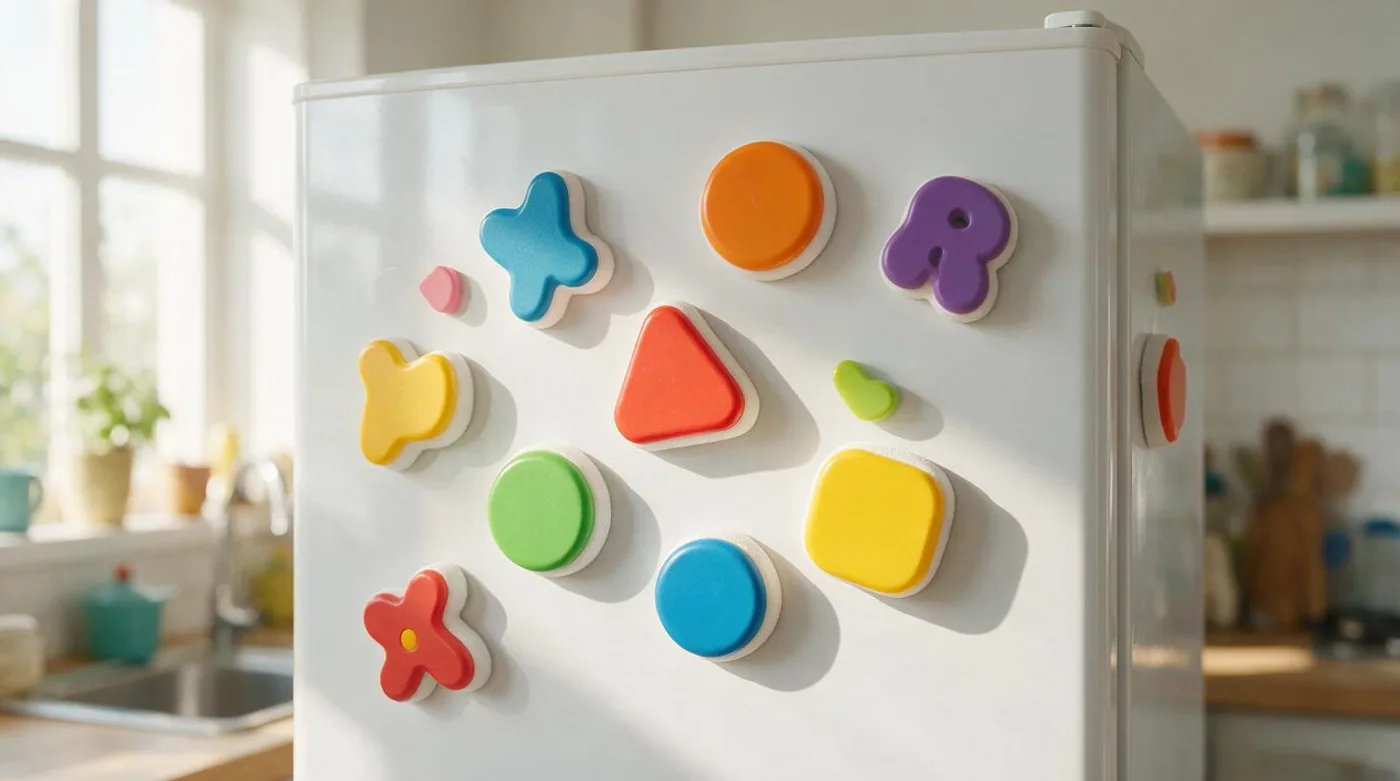
Two swallowed magnets behave very differently from one. A single magnet passes. Two find each other through whatever tissue lies between them, clamp it, and the trapped tissue dies within hours. That is the CPSC's position on small high-powered magnets, and it is the reason this page starts with what to keep out of a child's set before it gets anywhere near which letters look nicest on the door.
This page compares magnet builds rather than retail brands, because published specifications from sellers in this category are not available. Toy listings give a color, an age range and a piece count, and almost never the magnet grade, the disc size or how the magnet is fixed into the body. So the comparison below is between constructions. Pull force figures come from manufacturer listings and the generic values in our facts sheet, and nothing here has been measured by us.
What the CPSC says, and why it matters at this size
The CPSC runs a safety education center on magnets, and its warning is about small high-powered magnets rather than magnets in general. The distinction is worth holding onto. A ferrite disc sealed inside a molded letter is not what the warning is about. A bare neodymium disc that fits inside a child's mouth is exactly what it is about.
The mechanism is simple and unpleasant. Two magnets swallowed at different times sit in different loops of bowel, attract through the two walls, and pinch them together hard enough to stop blood reaching the pinched tissue. The tissue perforates. By the time it produces symptoms that look like anything other than a stomach ache, the damage is done, and the treatment is surgical. An X-ray showing two magnets that appear to be touching cannot tell you whether they are in the same loop or two different ones.
The practical rule that follows takes ten seconds to apply. If a magnet in the house is smaller than a coin and stronger than it has any right to be, it does not live where a child goes. That includes the fridge door, because things fall off fridge doors.
Choking, and the parts that come loose
Swallowing a magnet is the rare, severe case. Choking on a piece of one is the common case, and it does not need the magnet at all. A die-cut foam letter loses its crossbar. A glued disc pops out of the recess in the back of a wooden letter. A painted plastic eye comes off a magnetic animal. Any of those is a small part in a mouth.
The home check is whether a piece passes through the cardboard tube from a toilet roll, which is close enough to the size of a small child's airway to be useful. Anything that goes through goes away. The second check is the join: pull the magnet on each piece firmly, twist it, and see whether it moves. A disc glued into a shallow recess with a spot of adhesive is a piece waiting to come out, and it is the most common construction in cheap wooden sets.
Why neodymium has no place in a child's set
| Build | Magnet | On bare steel | Swallowing risk | Loose parts |
|---|---|---|---|---|
| Molded letter, sealed disc | 20 x 3 mm ferrite | 500 g | Sealed inside body | None |
| Foam letter, sheet back | 0.75 mm sheet | 110 g at 50 x 50 mm | Sheet is bonded, not loose | Torn foam |
| Wooden letter, sheet back | 0.75 mm sheet | 110 g at 50 x 50 mm | Sheet is bonded, not loose | Peeled sheet |
| Building tile | Neodymium bars | Not listed | High if a tile splits | Bars, if the weld fails |
| Loose disc | 10 x 2 mm N42 | 1,400 g | High | The magnet itself |
Set the numbers beside each other and the case makes itself. A 20 x 3 mm ferrite disc holds 500 g on bare steel and about 350 g on a painted door, since a painted door keeps 60 to 80 percent of the plate figure. A 10 x 2 mm neodymium disc holds 1,400 g, nearly three times as much, from a magnet half the diameter. Nothing a child does with letters on a fridge needs 1,400 g. The extra strength buys nothing and carries the entire risk.
Magnetic building tiles sit in an awkward middle. The neodymium bars inside are sealed behind a plastic weld, and while that weld holds, the set is fine. Welds fail, usually when a tile goes under a chair leg or gets thrown. Buy tiles for a child old enough not to mouth them, check them for cracks the way you would check anything else made of thin plastic, and retire a split tile immediately rather than taping it. More on the material itself is in neodymium magnets.
Hold, which is the easy part
Hold is where most buying guides start and where the least thinking is needed, because the magnetic requirement for a plastic letter is almost nothing. A molded letter with a sealed ferrite disc has about 350 g of grip on a painted door and weighs a tiny fraction of that. It stays where a two-year-old puts it, and it also comes off when the same two-year-old wants it off, which matters more than it sounds. A magnet a child cannot remove gets pulled at until something breaks.
Flexible sheet backing at 0.75 mm holds 110 g on bare steel at 50 x 50 mm and about 77 g on a painted door. That is fine for foam, which weighs very little, and marginal for plywood. It is also area-dependent, so a slim letter like an I or an L gets a much smaller strip than an O and holds correspondingly less. Sets with sheet backing tend to lose their thin letters off the door first.
Durability and cleaning
Molded plastic is the build that survives a childhood. It does not tear, it does not absorb, and it washes in warm soapy water without changing. Ferrite inside it is rated to about 250 C, so heat is never the issue, though a dishwasher's water jets will work at any glued seam and force water into the body, which then sits there. Hand wash and dry flat.
Foam is quiet, light and cheap, and it tears along the die-cut edge within a few months of real use. It also soaks up milk, juice and everything else that lands on a kitchen floor, and once it has, it stays smelling of it. Plywood in a kitchen takes up moisture from steam and cups slightly, which lifts the flexible sheet off the door at the corners so the letter starts sliding for reasons that have nothing to do with the magnet.
If the point of the set is displaying drawings rather than spelling, the same rules apply with different geometry, and kids art display covers hanging paper without covering it in magnets. For sets that live on the door beside food, our magnets and food safety page has the short answer, and letters, numbers and kids magnets has the rest of the formats.
Check the door before you buy the set
None of this matters if nothing sticks. Many stainless fridge doors are austenitic 304 stainless, whose face-centered cubic structure holds no magnetic domain, so a full alphabet arrives and slides straight to the floor. Ferritic 430 stainless doors are magnetic and look the same. Take any magnet you already own to the door and try it before ordering, and if the door refuses it, remember that the painted mild steel side panel almost always works.
Height is the other thing to settle first. Usable door width on most models is 40 to 60 cm, and a small child can reach maybe the bottom third of the door, which is the strip that will actually get used. Everything above it is storage. Putting the letters low and the parents' paperwork high stops the daily argument, and it also keeps the pieces within reach of a child who wants them off, so nobody climbs. The metallurgy behind the stainless problem is in why magnets do not stick to stainless.
What to do on the day it arrives
Open the box away from the child, and count the pieces against whatever the packaging claims. Pull and twist each magnet. Put anything that passes through a cardboard tube straight in the bin, and do the same for any piece with a magnet you can move with a thumbnail. Then count again after every tidy-up, because a set of 26 letters that is now a set of 25 has one letter somewhere, and the useful question is where.
Frequently asked
What happens if a child swallows a magnet?
The CPSC warns that swallowing more than one small high-powered magnet is a medical emergency. Separate magnets attract through the walls of the bowel, trap the tissue between them and cut off its blood supply, which usually means surgery. Go to an emergency department rather than waiting.
Are neodymium magnets safe for children?
No. A 10 by 2 mm N42 disc holds 1,400 g and is small enough to swallow, and a 6 by 2 mm disc holds 700 g and is the size of a lentil. A ferrite disc sealed inside a molded letter does the job with none of that.
How strong does a kids magnet need to be?
Very little. A 20 by 3 mm ferrite disc holds 500 g on steel and about 350 g on a painted door, and 0.75 mm flexible sheet holds 110 g at 50 by 50 mm. A plastic letter weighs a fraction of either.
Can magnetic letters go in the dishwasher?
Ferrite is rated to about 250 C so heat is not the problem, but water that gets behind a glued disc or under a flexible sheet is. Wash them by hand in warm soapy water and dry them flat.
What should I check when a set arrives?
Pull on each magnet, look for anything that fits through a cardboard tube from a toilet roll, and count the pieces against the box. Recount after every tidy-up, because the piece that goes missing is the one that matters.