Best decorative fridge magnets and art magnets
A flat glazed ceramic tile on a 20 by 3 mm ferrite disc is the pick for decorative magnets. The disc holds 500 g on steel and about 350 g on a painted door, the flat back gives the glue full contact, and a glaze does not yellow or scratch.
Where these figures come from
This comparison uses published product specifications. We have not handled or measured these products. Prices and availability can change; check the seller's listing before ordering. Method, equipment, and limits are on the how we test page.
Spec comparison
| Spec | Glazed ceramic tile, ferrite disc back | Glass cabochon, ferrite disc back | Printed acrylic, flexible sheet back | Pressed flower resin, ferrite disc back | Laser-cut wood, ferrite disc back |
|---|---|---|---|---|---|
| Material | Glazed ceramic tile, ferrite disc bonded to the back | Domed glass lens over paper, ferrite disc back | Cast or extruded acrylic, flexible ferrite-in-vinyl sheet | Pressed botanicals in epoxy resin, ferrite disc back | Plywood panel, ferrite disc bonded to the back |
| Listed thickness | 3 mm | 3 mm | 0.75 mm | 3 mm | 3 mm |
| Sizes | 20 mm disc back, 50 to 76 mm face | 20 mm disc back, 25 to 40 mm face | 50 x 50 mm sheet | 20 mm disc back | 20 mm disc back |
| Price per magnet | Not listed | Not listed | Not listed | Not listed | Not listed |
| Minimum order | Not listed | Not listed | Not listed | Not listed | Not listed |
| Shipping | Not listed | Not listed | Not listed | Not listed | Not listed |
| Pull force | Not yet measured | Not yet measured | Not yet measured | Not yet measured | Not yet measured |
| Measured thickness | Not yet measured | Not yet measured | Not yet measured | Not yet measured | Not yet measured |
| Print sharpness | Not yet measured | Not yet measured | Not yet measured | Not yet measured | Not yet measured |
| Corner lift after 30 days | Not yet measured | Not yet measured | Not yet measured | Not yet measured | Not yet measured |
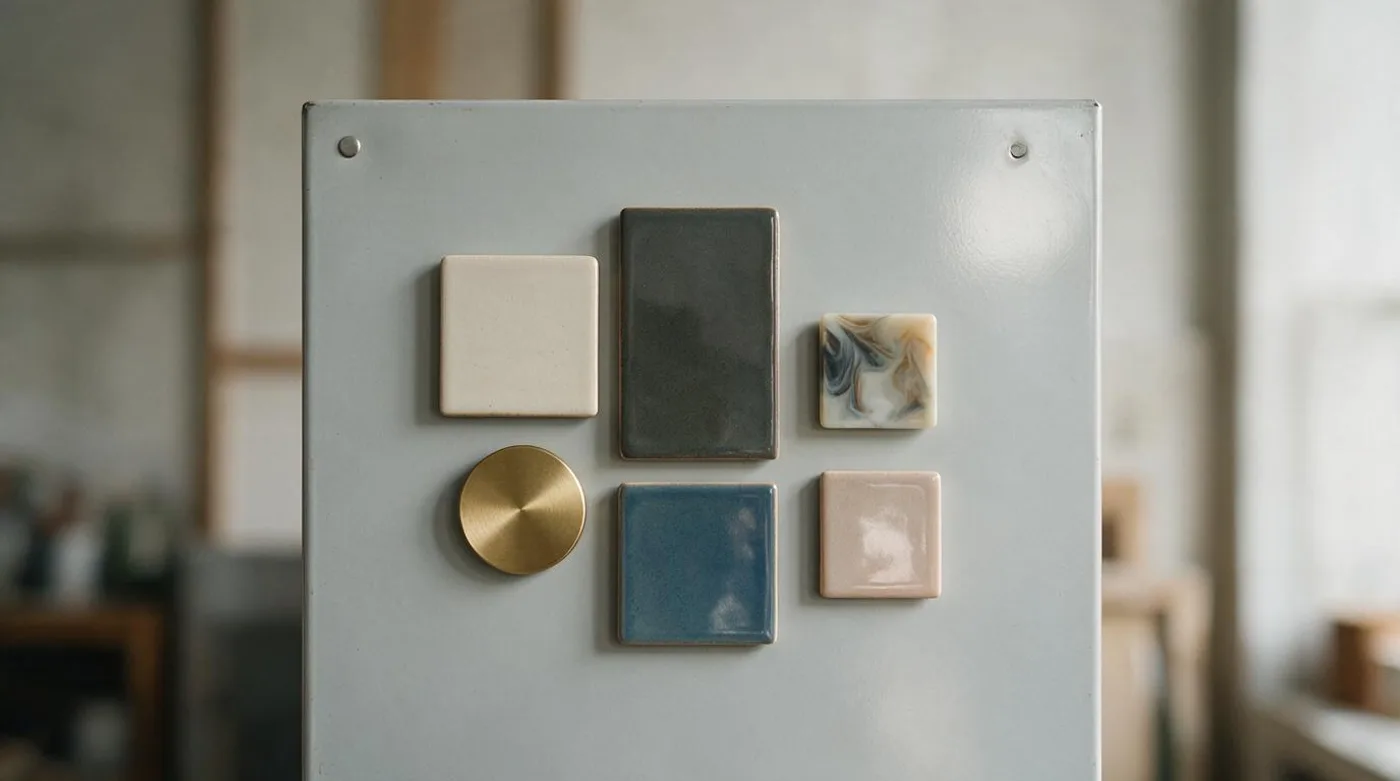
Put a glazed ceramic tile and a glass cabochon on the same door and they behave like different products. The tile is flat, so its 20 x 3 mm ferrite disc lies square against the steel and delivers its full 350 g of hold on paint. The cabochon carries most of its weight in a dome that stands 8 or 10 mm out from the door, so gravity gets a lever to work with, and the same disc has to fight a turning force the tile never generates. Both are lovely. Only one of them is still level in a fortnight.
This page compares magnet builds rather than retail brands, because published specifications from sellers in this category are not available. Decorative magnets come from small makers and market stalls who list a picture and a size, and the magnet on the back goes unmentioned. What follows compares the constructions instead, on the two things that decide whether a piece stays on the door and stays looking right. Every pull force figure is a manufacturer listing or a generic value from our facts sheet.
Backing area, weight and the turning force
| Build | Backing | On a painted door | Weight for its size | Ages badly through |
|---|---|---|---|---|
| Glazed ceramic tile | 20 x 3 mm ferrite | about 350 g | High, but flat | Chipping if dropped |
| Glass cabochon | 20 x 3 mm ferrite | about 350 g | High and standing proud | Print fading under the glass |
| Printed acrylic | 0.75 mm sheet | about 77 g at 50 x 50 mm | Low | Scratching and hazing |
| Pressed flower resin | 20 x 3 mm ferrite | about 350 g | Moderate | Epoxy yellowing, flowers browning |
| Laser-cut wood | 20 x 3 mm ferrite | about 350 g | Low | Cupping in steam |
Every build with a 20 x 3 mm ferrite disc starts from the same 500 g on bare steel and about 350 g on a painted door, since paint keeps only 60 to 80 percent of the plate figure, which is why the hold column looks flat. What separates them is whether the disc gets to use that grip. A flat back on a flat panel keeps the disc in full contact. A dome, a thick casting or a cupped piece of plywood tilts the disc a fraction of a degree, and each tenth of a millimeter of gap that opens up costs a small disc roughly 10 percent of its pull.
The flexible sheet row is the outlier. Sheet is ferrite powder in vinyl with a surface field around 300 Gauss, and at 0.75 mm it holds 110 g over a full 50 x 50 mm, about 77 g on a door. That is a quarter of what a single small disc does, spread over four times the area. For a light acrylic panel it is enough. For anything with mass it is not, and the giveaway is a piece that hangs straight for a day and is crooked by the weekend.
Why the glazed tile wins
A glazed ceramic tile is flat on both faces, which is worth more than it sounds. The disc sits square, the piece sits flush, and there is no lever for gravity to pull on. The glaze is fired glass, so it does not fade in sunlight, does not yellow, does not scratch under a normal cloth, and cleans off cooking film with soapy water and no thought. Ten years in a working kitchen leaves it looking the same as the day it went up.
The weaknesses are honest ones. It is heavy for its footprint, so anything wider than about 60 mm wants two discs rather than one, set near the top and bottom edges so the pair resist rotation. And it is ceramic, so a drop onto a tiled floor takes a corner off. That is the trade against a face that outlives everything else here.
Glue is the part that actually fails
Ask why a decorative magnet fell off and the answer is rarely the magnet. Ferrite loses almost nothing over a human lifetime, and even neodymium sheds only about 1 percent of its strength per decade at room temperature, which is covered in how long magnets last. What fails is the bond between the disc and the piece.
A glaze is a smooth, non-porous surface with nothing for adhesive to key into, so a cyanoacrylate bond on glazed ceramic is doing its worst work. The tell is unmistakable when it goes, because the disc stays stuck to the fridge and the tile is on the floor. The same applies to glass cabochons. Makers who key the surface first, with a scuff of abrasive paper across the contact patch before gluing, produce pieces that survive; the ones who glue straight onto the glaze produce pieces that come back to haunt them.
Kitchen heat plays into it too. A magnet on the wall above a hob sits in warm, greasy air, and grease creeps into the join. Neither ferrite nor the tile minds the temperature, since ferrite is rated to about 250 C, but many adhesives soften long before that.
How each face ages beside a cooker
Pressed flower resin is the shortest-lived build on this page, and it is the one people are most sorry to lose. Epoxy yellows under ultraviolet light, and the botanicals inside it brown on their own schedule, so a piece on a door that catches afternoon sun visibly changes within a couple of years while the same piece on a shaded door lasts far longer. Position decides its life more than the maker does.
Printed acrylic goes by a different route. The plastic itself handles sunlight well, and the finish does not. Every wipe with an abrasive cloth adds fine scratches, they accumulate into a haze, and a printed image under a hazed surface loses contrast before it loses color. Direct print on the front face wears faster than print on the back of a clear panel, so a piece printed from behind and viewed through the acrylic keeps its image longer. There is more on both materials in wood and acrylic magnets.
Laser-cut wood is the one that changes shape rather than color. Thin ply in a steamy kitchen absorbs moisture and cups, and a cupped panel lifts one edge of its disc off the door, so a magnet that held 350 g last winter starts sliding this spring. Sealed ply and thicker stock resist it. Bare 3 mm ply near a kettle does not.
Glass over paper is stable in every way except one. The glass protects the print from grease and hands, and does nothing about light, so an unsealed inkjet image under a cabochon fades in a sunny kitchen while the glass stays perfect.
Rescuing a piece that will not stay up
Most decorative magnets can be fixed in ten minutes, and the fix is nearly always the same. Take the old backing off, scuff the contact area with fine abrasive paper until the shine has gone, clean it, and bond a 20 x 3 mm ferrite disc back on with an epoxy rather than a thin cyanoacrylate. For anything wider than about 60 mm, use two discs near the top and bottom edges instead of one in the middle, which stops the piece rotating.
That change takes a sheet-backed panel from roughly 77 g of hold on a door to about 350 g, and a badly glued tile from nothing at all to the same. Where the piece is genuinely too heavy for its footprint, a 25 x 5 mm ferrite disc is the next step up at 1,100 g on steel and about 770 g on a door, at the cost of standing 5 mm off the back. Neodymium is available and unnecessary here, since a 20 x 3 mm N42 disc holds 3,500 g and would sooner lift the glaze than let go.
Hanging a wall of them
Usable door width on most fridges is 40 to 60 cm, which sounds like a lot until you lay out 76 mm tiles with a finger of gap between them and find you have room for six across. A decorative collection reaches that limit faster than any other category, and the overflow goes to the side panel, which on most models is painted mild steel and magnetic even when the door is not.
Two practical points before committing to a display. Check the door itself with a spare magnet, because many stainless doors are austenitic 304 and hold nothing at all. And keep the heavier pieces low, since a tile that comes off at chest height onto a tiled floor is a lost tile, while the same tile leaving from 20 cm up usually survives. Our what to look for page covers the questions to ask a maker, and decorative and art magnets has the wider range of formats.
Frequently asked
How heavy can a decorative magnet be?
One 20 by 3 mm ferrite disc keeps about 350 g on a painted door, but only if the back is flat. A thick or domed piece of the same weight rotates off the door instead, so use two discs on anything wider than about 60 mm.
Why does my ceramic magnet keep falling off?
Usually the glue rather than the magnet. A ferrite disc bonded to a glazed surface has almost nothing to key into, so the bond fails at the glaze and the disc stays on the fridge while the tile hits the floor.
Do acrylic magnets yellow?
Acrylic itself resists ultraviolet light well. The finish is what goes, since abrasive cloths haze the surface and every wipe adds another set of fine scratches. Epoxy resin, used in pressed flower magnets, does yellow in sunlight.
How many magnets fit on a fridge door?
Usable door width on most models is 40 to 60 cm. A wall of 76 mm tiles with a finger of space between them fills that quickly, which is why large collections spill onto the painted side panel.